


About The Author

About The Author
Law firms that successfully attract clients online are not doing it by luck.
They realize that the whole digital economy starts with a website.
Your website is one of the pillars of your business.
If it’s not 100 % tailored to your unique needs, your entire client generation strategy might collapse.
Yet, even with custom lawyer web design done by professionals, success isn’t guaranteed.
Your website will only be as good as the input you provide to your agency and the requirements you set.
Without full project clarity, you can end up spending your entire marketing budget on digital assets that still don’t generate new client appointments.
Questions keep piling up:
You only want a clear path to get more clients online without wasting time or money.
But without those answers, it’s difficult to communicate your vision to any agency, leading to misunderstandings, wasted time, and expensive redesigns.
A custom lawyer website design is the foundation of any successful law firm marketing strategy. Firms that invest in tailored web design and project clarity consistently rank higher on Google, attract more qualified leads, and convert 50 % more consultations than those relying on templates.
My web design agency in Chicago has worked on several lawyer website design projects in the past two years. And I’ve found that the top 1% of custom lawyer web design focuses on key elements that many law firms overlook.
In this post, I’ll walk you through the 11 key steps for custom lawyer web design that help attorneys reach top spots in search engines, build trust, and convert visitors into clients. These evergreen strategies will make your law firm’s website one of the best-performing in its niche and set the stage for long-term online growth.
Get the exact design blueprint that makes high-end firms dominate Google.
Many law firms get tricked into using cheap attorney website templates, thinking they’ll save money. The worst part? It’s rarely their fault. They’re misled by web designers seeking quick cash and shortcuts, promising results that only a custom lawyer web design can deliver.
At first, a templated website seems like a budget-friendly fix. But months later, after paying thousands, you realize your main digital asset looks identical to 99% of other law firm websites. It’s generic, slow, and invisible on Google. No matter how much you invest in SEO, it won’t climb the rankings because the foundation simply isn’t built for performance.
The best law firm websites (top 1%) are all custom-built. They don’t just look different; they perform differently. A custom web design for lawyers allows:
If your law firm’s online presence feels stagnant or indistinguishable, the issue isn’t your marketing; it’s your template. In short, success online requires more than filling out placeholders. It demands a website that’s engineered around your firm’s goals, audience, and authority.
And that’s what sets the truly competitive law firms apart.
As someone who’s been in the web design industry for over 15 years, one look at lawyer websites is usually enough for me to tell if they stand any chance in the competitive landscape.

Building a website that ranks high, builds trust, and converts visitors into clients doesn’t happen by accident. It’s the result of a well-planned and strategic approach that ensures every aspect of your website is tailored to your firm’s goals and audience.
Here are 11 steps you should prioritize to turn your law firm’s website into a high-performing digital asset that consistently attracts, engages, and converts clients.
In our experience building custom lawyer web design projects for firms across the U.S., visuals are often the fastest way to build trust, or lose it. The top 1 % of law firm websites succeed because their aesthetics feel unmistakably theirs: cohesive colors, authentic imagery, and a design language that mirrors their authority.
When your website’s appearance aligns with your law firm branding and audience expectations, engagement and conversions rise naturally.
Tailored aesthetics are one of the main reasons custom web design for lawyers consistently outperforms templates. Yet with limitless customization options, many firms drift away from what truly represents their identity. A design that looks “great” but doesn’t reflect your values or audience can quietly cost you clients.
To ensure your visuals connect with both brand and audience, take these steps before working with a web design agency:
If you need inspiration, we’ve found that high-performing law firm website designs share a few common traits:
Done right, your website’s look becomes proof of your credibility.

While first impressions matter, it takes more than a beautiful color palette and the right design styles to make potential clients trust you.
I’m not a big fan of the ‘in your face’ approach, especially in the legal industry.
But there are several key elements you should incorporate in your custom lawyer web design to build trust with your audience subtly:
Place short, compelling testimonials from satisfied clients throughout your website. These should be authentic and specific, highlighting your expertise and success.
A dedicated testimonials page, as well as strategic placements near key CTAs, will reinforce your credibility.
Present how you’ve handled matters similar to your visitors’ needs. Outline the challenge, your method, and the result in clear, human language.
Showcase bar-association memberships, awards, and professional affiliations. These reinforce expertise instantly and are indispensable in law firm web design.
Let prospects meet your team visually. Use professional but approachable photography and detailed bios that reveal personality and specialization.
Share impressive stats, like the number of cases won, years of experience, or total settlements secured for clients.
Quantifiable achievements speak volumes about your success without needing flashy messaging.
If your firm works with well-known corporate clients, consider including their logos (with permission).
This can be a powerful visual cue for prospective clients to trust your firm’s capabilities.
The strongest custom web design for lawyers balances authority with warmth; professionalism without pretense. Done well, these quiet trust signals make your law firm’s website feel not just legitimate, but dependable.
Even the most visually impressive website can fail if no one finds it. A high-performing law firm website design must be built with SEO baked into every layer: structure, code, and content. When your site is discoverable, fast, and optimized for relevance, it attracts qualified visitors who are already searching for your legal services.
The best custom lawyer web design projects share one foundation: search visibility. An SEO-friendly build doesn’t just bring your firm to the top of Google, but keeps you there by combining technical precision with content strategy. That means reaching potential clients without depending on paid campaigns.
A truly optimized law firm SEO framework should include:
A strategic SEO foundation transforms a website from a digital brochure into a dependable client-generation system, one that continues working long after ads stop running.
Because the website was never built for it.
Page speed is one of the most underestimated ranking factors in law firm SEO. A fast, responsive site instantly signals professionalism and keeps potential clients from bouncing before they even see your message. When a law firm website design loads in under a second, visitors stay longer, read more, and convert more often.
Google’s Core Web Vitals directly tie performance to visibility. Even though some professionals consider three seconds acceptable, real-world data proves that every extra second costs conversions. A sub-1-second load time gives your custom lawyer web design a measurable competitive edge in both search rankings and user satisfaction.
To achieve this level of performance, focus on:
Also, avoid unnecessary motion or heavy animations that drag load times. In modern SEO-friendly website design for lawyers, simplicity isn’t just aesthetic, it’s strategic. Speed is one of the clearest ways to prove technical excellence to both users and search engines.
Visitors land on your website with one question in mind: Can this firm help me with my specific case?
A well-structured practice areas section answers that instantly. When each service (family law, bankruptcy, personal injury, or immigration) has its own clear, optimized page, clients feel understood and search engines recognize your topical authority.
For example, when crafting web design for family lawyer pages, we often emphasize empathy and clarity, while divorce or bankruptcy pages focus more on trust and reassurance. Tailoring tone and visuals to each area helps potential clients feel you’re speaking directly to their needs.
A dedicated section also boosts discoverability. Each page in a law firm website design should:
This approach helps your firm rank for multiple practice-specific searches while improving user experience.
Within a custom lawyer web design, highlight your firm’s expertise through concise explanations, approachable tone, and clear CTAs that guide readers toward booking consultations. To sum up, your practice areas section should do what good legal counsel does best: communicate clarity, confidence, and capability.
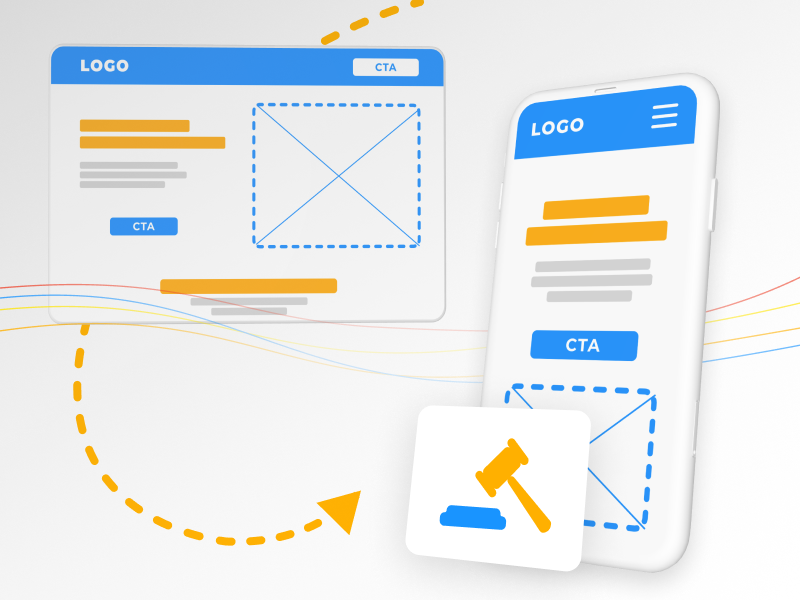
Most potential clients will first encounter your firm on a phone. With more than 60 % of web traffic now coming from mobile devices, a site that isn’t responsive costs you visibility, trust, and cases.
The best examples prove that design precision on smaller screens directly correlates with higher engagement and lead generation.
When your layout breaks on mobile, every flaw becomes magnified:
A truly custom lawyer web design should adapt seamlessly across devices. That means fluid grids, responsive images, simplified menus, and optimized font scaling that deliver a consistent, elegant user experience. Mobile optimization isn’t optional; it’s part of SEO for lawyers and a critical signal for Google rankings.
A great website shouldn’t require a developer every time you need to post an update. A tailored Content Management System (CMS) turns your firm’s site into a living asset you can control.
When the CMS is customized to your team’s skills, adding case results, blog posts, or attorney bios becomes fast and intuitive.
Choosing the right platform is critical. In many custom lawyer web design projects, we’ve seen firms debate whether to build from scratch or use an existing system. The real question isn’t code; it’s flexibility and growth. Understanding how different setups perform, such as Squarespace vs WordPress for law firm websites, helps determine which solution aligns with your workflow, SEO strategy, and content volume.
A well-planned law firm website design should include:
An efficient CMS keeps your site relevant, fast, and compliant with evolving SEO for lawyers standards, while freeing your attorneys to focus on clients, not code.
A strong custom lawyer web design serves as the operational hub for your client intake, communication, and case management systems. But the wrong integrations can silently drain conversions. If tools load slowly, break forms, or confuse users, every click you’ve paid to earn becomes a lost opportunity.
For effective law firm website design, focus on the integrations that genuinely improve workflow and client experience:
Poorly built connections between these tools can slow page load times, clutter interfaces, and even cause data conflicts. These problems not only frustrate visitors but also waste the budget you’ve already invested; a common hidden factor in overall law firm website design costs.
To do it right:
Smart, lightweight integrations keep your law firm SEO strong and your clients’ experience friction-free. The best custom web design for lawyers balances capability with simplicity, building a digital system that runs as efficiently as your practice. Grab a call with my team and see how a structured plan changes everything.
Every law firm manages highly confidential material, from case files and personal IDs to financial records. If your site isn’t secure, a single breach can destroy years of credibility and expose your clients to serious risk. The most successful custom lawyer web design projects treat cybersecurity as a core design feature, not an afterthought.
In specialized niches like bankruptcy lawyer web design, where clients regularly share financial details, airtight protection is non-negotiable. Basic plugins or generic security packages simply don’t provide the depth of defense your practice needs.
Essential measures include:
Custom security architecture not only protects sensitive information but also strengthens law firm SEO; Google rewards sites that maintain reliability and trust. Basically, digital safety is part of modern professionalism: a secure site tells clients their data is valued as much as their case.
A genuinely professional custom lawyer web design doesn’t just look impressive; it also protects your firm legally. Accessibility and privacy compliance are essential for every modern law firm website design. Failing to meet these standards can lead to lawsuits, lost trust, and entire segments of potential clients being shut out.
For instance, in projects like divorce lawyer web design, where emotionally sensitive content is common, accessibility isn’t just a regulation, but a sign of empathy and professionalism. A site that’s readable, navigable, and inclusive creates an immediate sense of respect and reliability for all users.
Key compliance areas every firm should prioritize:
Compliance builds credibility. Search engines increasingly favor accessible sites, so improving usability directly supports your law firm SEO while communicating integrity and inclusivity to your audience.
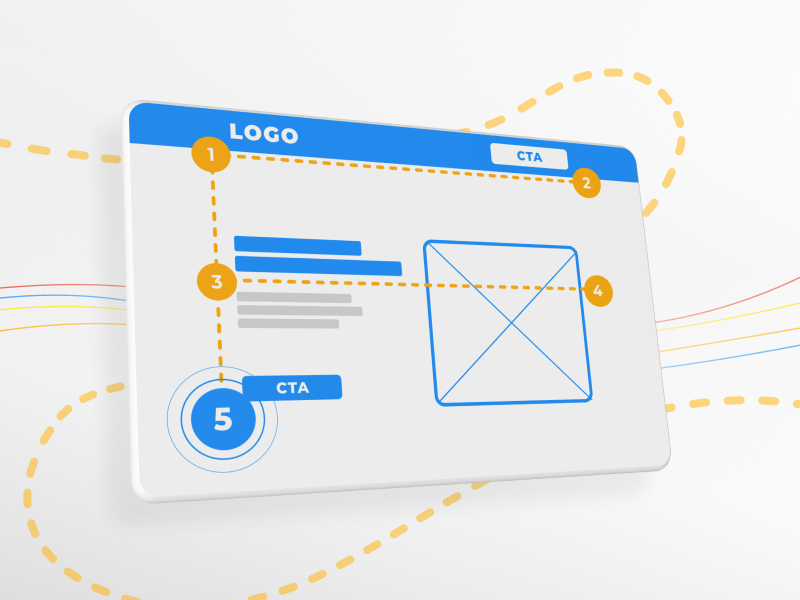
Every high-performing custom lawyer web design has one unspoken rule: guide the visitor without them realizing it. Visual hierarchy is how you lead users from curiosity to conversion through structure, not pressure. It’s about creating a rhythm that naturally pulls the eye where you want it to go, toward your law firm website design’s most important actions.
Think of it as a slippery slope: each design choice helps visitors take the next small step until scheduling a consultation feels like the logical conclusion. Effective user experience design for attorneys blends aesthetics, spacing, and psychology to achieve this balance.
Here’s how to make it work:
In top-tier SEO-friendly website design for lawyers, hierarchy drives conversions more than slogans do. It’s the invisible structure that turns information into motion, guiding visitors toward action while keeping the experience effortless, confident, and trustworthy.
Imagine this: You’ve poured time, energy, and money into your law firm’s website, but it’s still not bringing in the clients you need. The phone stays silent. Your contact forms remain untouched. You’re starting to wonder if this digital thing is really worth it.
But then, you take the leap—you invest efforts, time, and money in a custom lawyer web design built specifically for your firm, your clients, and your goals.
You’re not just outsourcing all the work to professionals, you’re providing them with crucial piece of information for crafting a site that’s 100% tailored to your law firm.
At first, things feel different.
But beyond the design, something else happens.
Clients start to find you.
Suddenly, your firm is ranking higher on Google.
People who never knew you existed are landing on your site, and they’re staying. They’re reading. They’re calling.
Every piece of your website has been designed to build trust, answer their questions, and guide them to book a consultation.
And it works.
Your calendar starts to fill up.
The days of wondering where your next client will come from are over.
You’re booked solid.
The custom website that once felt like a risk is now your most powerful tool for client generation.
From no calls to full calendars – it all started with the right approach to custom web design.
I’ve witnessed many transformations like this in the past fifteen years of running Alpha Efficiency.
Project clarity is key.
Feeling overwhelmed by all the options in custom lawyer web design and unsure where to start?
You don’t have to figure it all out on your own.
Schedule a consultation, and my team and I will help you:
Let’s simplify your next big digital decision. Book your strategy session today.
1. Why does a law firm need custom lawyer web design?
A custom lawyer web design tailors every visual, structural, and SEO element to your firm’s goals. Unlike templates, it aligns branding, performance, and client expectations, ensuring your law firm website stands out on Google and builds immediate trust.
2. What features make a law firm website design effective?
The best lawyer website designs combine branding precision, fast performance, SEO-friendly builds, and trust-driven details like testimonials and attorney profiles. These features turn your site from a digital brochure into a reliable lead-generation tool.
3. How can SEO improve custom lawyer web design?
SEO transforms custom lawyer web design into a long-term client acquisition system. By optimizing page structure, Core Web Vitals, and keywords like local SEO for lawyers, your website earns higher rankings, stronger visibility, and consistent organic traffic.
4. Why is mobile responsiveness essential for attorney web design?
More than 60% of legal searches come from smartphones. Mobile-friendly web design for lawyers ensures flawless performance, readability, and speed across devices, boosting both rankings and user trust.
5. How can a law firm website build credibility online?
Trust-building is the cornerstone of custom lawyer web design. Showcasing testimonials, certifications, case studies, and real attorney photos adds authenticity and confidence, helping visitors feel secure before ever contacting your firm.

Recent Post
Brian Dordevic
Elements of a Good Website (Beyond the Fancy Animations)
READ MORE
Brian Dordevic
ADA Website Compliance Deadlines 2026: The Critical Compassion Gap
READ MORE
Brian Dordevic
You’ll Regret Skipping Web Design Quality Assurance
READ MORE