


About The Author

About The Author
Are you struggling to attract new clients to your family law practice, even though your legal expertise is second to none?
Do you find yourself wondering why your web design for family lawyer isn’t generating the traffic or consultations you expected?
You’re not alone. Building an effective family law web design is one of the most common challenges in the legal industry. We’ve seen it time and again with our very own clients.
That’s exactly why I created this ultimate family law website design guide to help you understand what actually drives clicks, calls, and conversions.
Inside, you’ll discover the essential elements of website design, from color psychology and branding to SEO for family law attorneys that gets your site noticed fast. You’ll also learn what makes custom lawyer website design unique and how small UX choices can make a big difference in earning trust and new cases.
Use these insights to attract the right clients, strengthen your brand, and build long-term relationships online.
It’s simpler than you think and far more profitable when done right.
Show clients you understand them before they even pick up the phone.

Many family law firms skip the most critical step in building their online presence: market research for web design.
Without it, they struggle to create a strong web design and fail to attract qualified traffic to their websites.
At Alpha Efficiency, we’ve seen firsthand how skipping this phase can delay growth for months. A bit of strategic research upfront can save your team endless trial and error later.
Before diving into specific web design elements, here are a few foundational steps to help you build a winning family law digital marketing strategy. Don’t worry, you’ll be able to follow these even if you don’t have an in-house marketing team.
The ability to identify your audience precisely is what separates the best family law websites from the rest. If you don’t know who you’re designing for, every creative choice becomes a guess.
Consider which practice areas you’ll emphasize. For instance, a divorce lawyer website design will look and feel different from one for a criminal defense attorney. Your target audience determines everything: layout, tone, imagery, and even the type of content you publish.
Defining your audience is step one toward building a strong family law marketing foundation, so don’t skip it.
Clarity drives performance. Setting clear goals for your web design for family lawyers gives direction and purpose to the entire project.
When you have a clear idea of what you want to achieve with your law firm website design, you can make better design choices and create a more compelling online presence. You’ll be able to craft a better user experience and eventually achieve the desired growth.
Keep your goals:
Create a short document outlining how your brand should look, sound, and feel. Establishing these guidelines before creating a web design for family lawyer will help you maintain consistent branding across digital marketing platforms, which is key to building a solid, recognizable brand.
Some examples are:
Strong brand guidelines not only help internal teams stay aligned but also give your designers a clear creative compass.

Web design for family lawyers is unique because it requires a delicate balance of professionalism and empathy. Family law cases are often sensitive, and clients often seek family law attorneys during difficult times in their lives. Your design has to say, “We understand what you’re going through, and we’re here to help.”
I’ve built countless custom lawyer website designs for firms navigating exactly this challenge. The difference between a good and great family law site often comes down to nuance: a softer headline, a warmer image, or a minimalist color palette that quiets the tension your visitor feels.
Speaking of color: Family law websites perform best with muted, calming tones: soft blues, gentle greens, or neutral earth colors, rather than the bold reds and blacks typical in corporate or criminal law sites. These subtle hues communicate approachability and care before a single word is read.
And let’s not overlook content. What sets the best law firm website design apart is relevance. The words on the page should feel like they were written for your visitor’s situation, not for search engines.
When your blogs, FAQs, and service pages speak directly to your audience’s fears and needs, connection (and conversion) follow naturally.
The internet made it easy for anyone to build a site, but “easy” doesn’t always mean effective.
With the rise of no-code builders, many attorneys ask the same question: Is a custom website still worth it?
Here’s the truth we’ve seen repeatedly at Alpha Efficiency: the DIY approach rarely pays off in the long run.
If you want your website to perform, not just exist, a custom lawyer web design will always give your practice the edge.
Here are just some benefits of building a custom website for your family law company:
A custom family law attorney website design lets you show your firm’s true identity and not a template version of it.
No-code tools can’t capture your tone, values, or brand guidelines the way custom-built ones can. When you control every detail, your site doesn’t just look professional, it feels like your firm.
Your website is often the first handshake your clients get.
With professional law firm website designers, you can build navigation, content flow, and visuals that match how real people search and decide. Visitors find what they need faster, and they remember you longer.
People do judge a book by its cover, and your family law firm website is no exception.
In a competitive field, design quality silently communicates trust. A polished site tells visitors, “We handle details with care.” That impression alone can turn a search into a consultation.
A custom web design for family lawyer gives you full control over technical and on-page SEO. From URL structure to schema markup, every element can be built for performance. That means higher visibility when potential clients search for the best family law firms, and more qualified leads landing on your pages.
Custom builds let you go beyond the basics. Add appointment scheduling, secure client portals, or integrated payments, all tailored to your workflow. These features not only help clients work with you seamlessly but also save your team time.
To sum up, a custom lawyer website design gives family law firms stronger branding, better UX, greater credibility, SEO benefits, and added functionality, such as online scheduling or secure portals, helping them attract and retain more clients effectively.
Wondering what site builder to use for custom code? WordPress is the way to go.
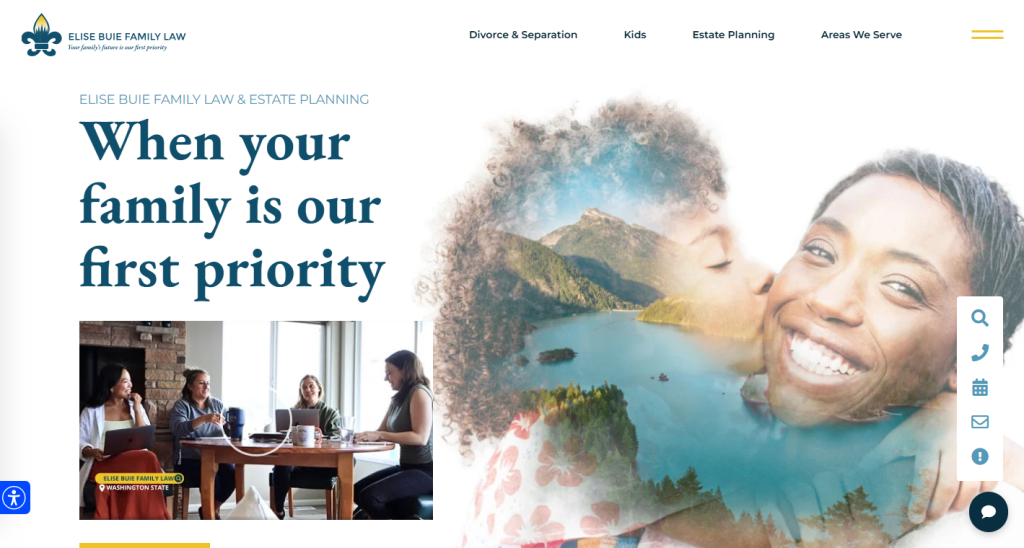
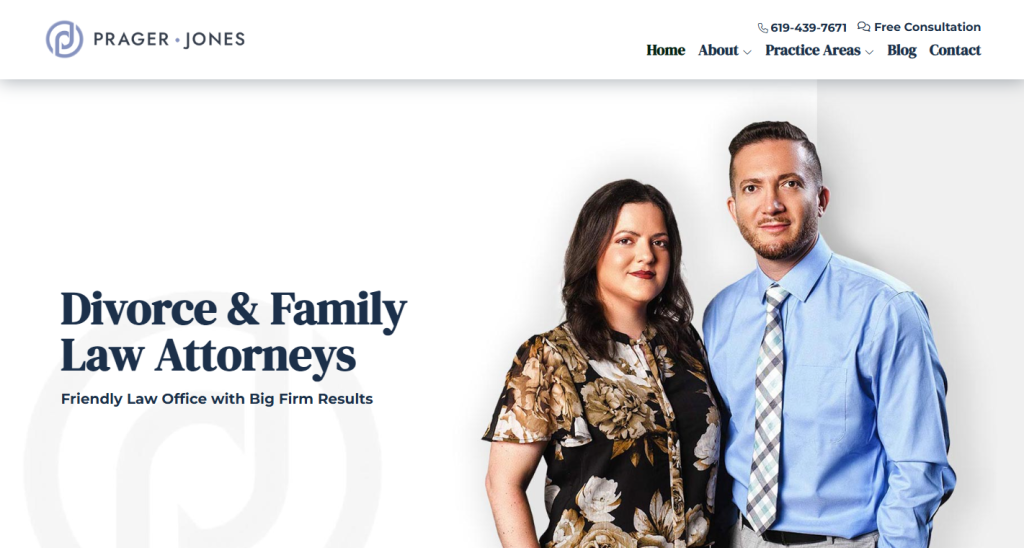
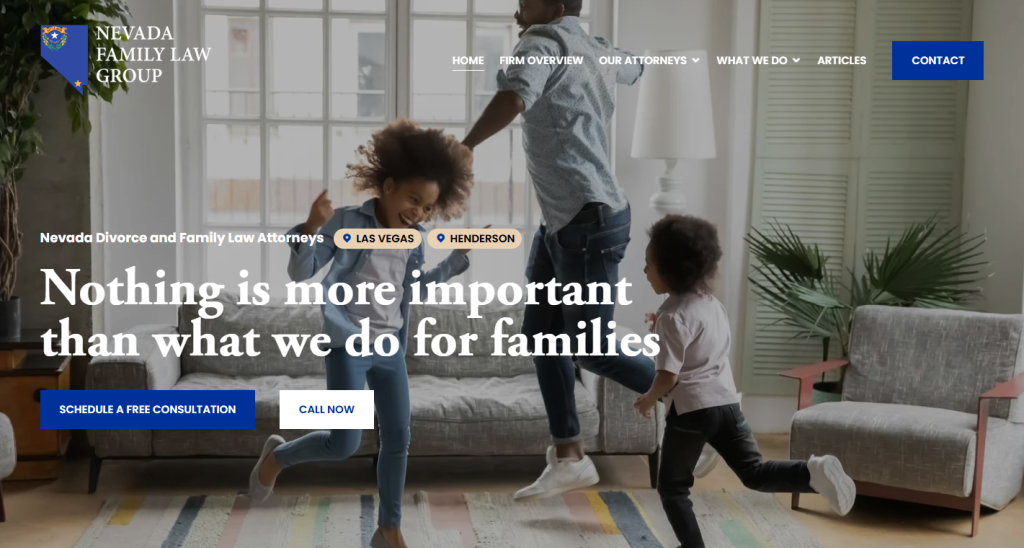
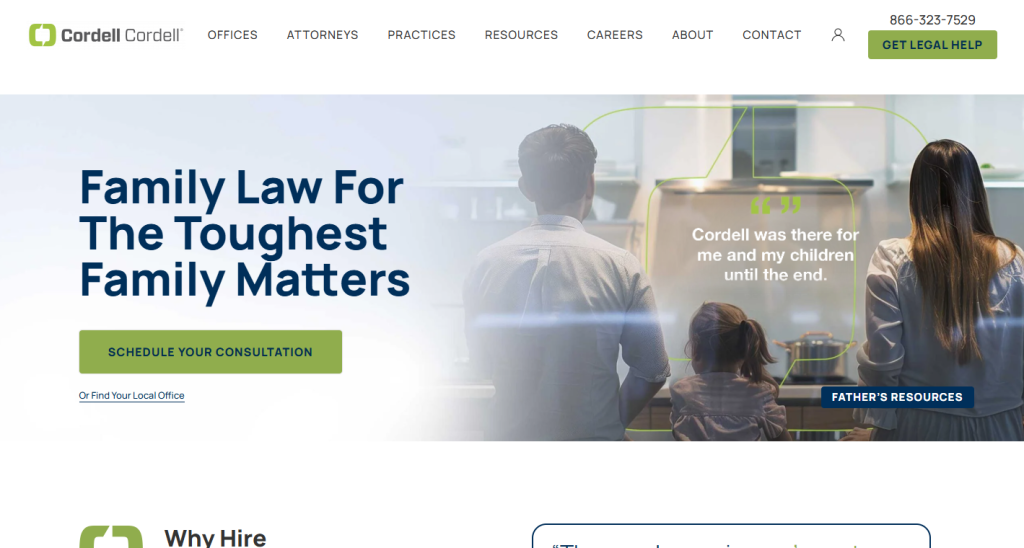
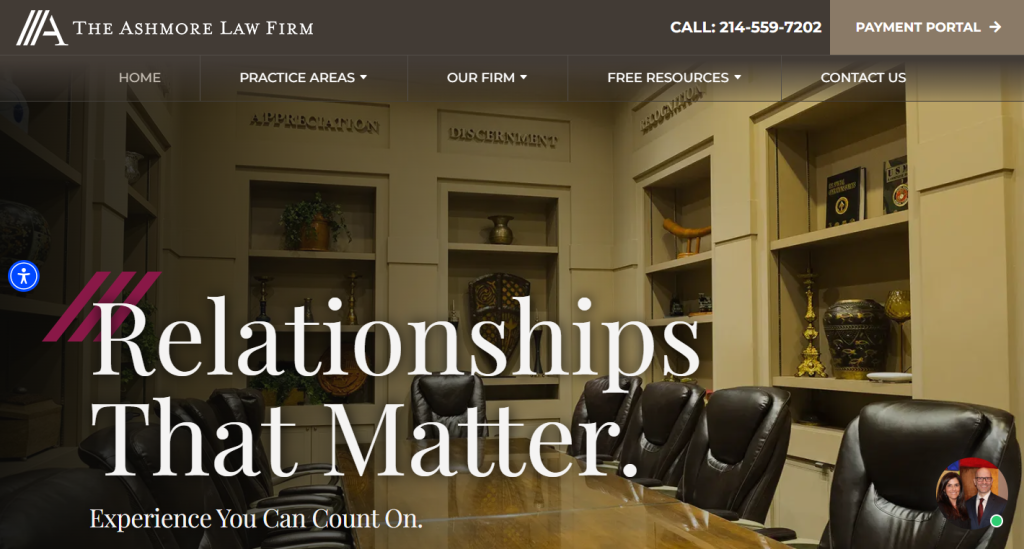
Curious what a high-performing family lawyer website design actually looks like in practice? Before we dive into the essential elements of great web design, let’s take a quick look at five standout examples of custom lawyer website design from U.S.-based firms. These sites showcase the real-world impact of effective web design for family lawyers, combining empathy-driven messaging, fast mobile-friendly layouts, and clear CTAs. If you’re aiming for the best law firm web design in your market, these examples offer valuable inspiration for what works today.
1. Elise Buie Family Law Group
You’ve now seen how strategy and research shape every winning law firm website.
The next step? Understanding what makes a web design for family lawyers truly stand out.
A great family lawyer website design combines clear navigation, responsive layouts, strong SEO, trust-building visuals, and persuasive content to convert visitors into clients.
These are the eight elements that separate average from exceptional, and the same principles we use at Alpha Efficiency when crafting every custom lawyer web design.

Your navigation is the GPS of your entire website.
When visitors land on your website, they’re not here to wander. They’re here to find answers, fast.
If they can’t? They leave.
Here’s how to make your web design for family lawyers intuitive, clean, and conversion-ready.
Keep it simple, clear, and human. Avoid legal jargon that only confuses visitors. The best web design for family lawyers uses plain language that helps potential clients instantly understand where to go and what to do next.
Design your navigation the way real users think. Group pages under practical categories like “Divorce,” “Child Custody,” or “Adoption.” Then test it. Watching someone new explore your site is the fastest way to spot friction points before they cost you clients.
Drop-downs are your best friend when you have multiple practice areas. Add a clear “Practice Areas” tab and organize subpages underneath.
It keeps your header neat while giving visitors an at-a-glance view of how you can help.
Changing the position of your menu or buttons from page to page confuses users. Keep your structure identical sitewide; consistency creates comfort, and comfort builds trust.
When in doubt, simplify.
Whitespace isn’t wasted space; it’s breathing room. In web design for family lawyers, a minimalist layout helps guide attention to what matters: your CTAs, your story, and the next step a visitor should take.
Great design without visibility is like a billboard in the desert, beautiful but unseen.
That’s why every high-performing web design for family lawyers starts with SEO in mind, not as an afterthought.
Do keyword research before you start designing. This way, you’ll have a clearer idea of the content you want to include on your law firm’s website and won’t need to make as many changes later.
Keyword research is your blueprint.
Before writing a single headline or designing a homepage, identify the terms your ideal clients type into Google. These guide your content, structure, and on-page SEO strategy, reducing the need for major edits after launch.
With professional keyword strategy tools, you’ll also uncover new opportunities to dominate in local SEO for lawyers or niche categories like family lawyer website design Chicago.
Even the best custom lawyer website design won’t rank if Google can’t read it.
Use a logical URL structure, XML sitemap, and clean navigation so search engines can crawl and index every important page.
Keep URLs short, descriptive, and keyword-rich, using hyphens between words. Every page should serve a clear purpose and link contextually within your family law content cluster.
Most clients searching for a family law firm website aren’t doing it from a desktop anymore.
They’re on phones, tablets, and everything in between.
That’s why every responsive web design for family lawyers must look, feel, and perform perfectly on any screen size. Mobile-friendly layouts not only improve UX, they directly boost your SEO rankings.
The most successful family lawyer website designs evolve, tracking rankings, monitoring metrics, and staying ahead of every Google update. That’s how your site goes from simply existing to consistently winning.

Color speaks before words do.
When someone lands on your family law firm website, the hues and tones quietly tell them who you are, calm and trustworthy, or cold and corporate.
Getting the color palette right is one of the most underrated parts of website design for family lawyers. It’s not about what looks pretty; it’s about what feels safe. In family law, safety and empathy drive conversions more than any CTA ever could.
Blue conveys peace, reliability, and honesty. Green adds balance and a sense of renewal, symbolizing growth and new beginnings. Together, they make visitors feel understood before they even start reading.
Colors like beige, brown, and muted yellow evoke comfort and grounding. Try a light beige background with brown accents or subtle golden tones for icons and buttons. It creates a soft, approachable atmosphere.
Red and black are powerful, but they send the wrong message here. They’re associated with aggression, conflict, or intimidation, the exact opposite of what your clients need to feel.
Simply put, every family lawyer website design should reflect the emotional tone of its clients’ journey.
Document your chosen palette in your brand guidelines to maintain consistency across every page and campaign. And if you’re unsure what fits your audience best, a lawyer website design agency with experience in color psychology can guide you to the perfect match.
Different fonts trigger different emotions. They can make your family law attorney website design feel modern, confident, and professional… or dated, cold, and out of touch.
When choosing typography for your family law attorney website design, pay attention to the following:
Your visitors shouldn’t have to squint to trust you.
Choose fonts that are clean and easy to read, especially for body text. Simple clarity beats decorative complexity every time. If your audience can glide through your content effortlessly, you’re already one step closer to conversion.
Fonts speak tone. Sans-serif fonts like Arial or Helvetica feel sleek, modern, and straightforward, perfect for professional firms. Serif fonts like Times New Roman convey tradition and authority, making them great for more classic brands.
The key? Choose typography that aligns with your firm’s personality and target audience. Your family lawyer website design should look like you, not like everyone else.
Typography isn’t just visual; it’s strategic.
Every font you use should reinforce your brand’s tone: approachable, confident, or authoritative. A cohesive style keeps your law firm branding consistent across every digital touchpoint.
Spend a few minutes browsing other lawyer website design examples. You’ll quickly see which styles look clean and credible, and which feel outdated. Learn from what’s working, then elevate it with your own twist.
Two or three fonts. That’s it.
Using too many creates clutter and confusion. Stick with one for your main text and one for your headings; maybe a third for accents if it fits your brand.
Minimalism here signals professionalism and lets your message take center stage.
Here’s a shortcut: For a professional family law attorney website design, choose fonts that are clear and legible and reflect your brand’s tone. Limit to 2–3 fonts for consistency and readability, ensuring your site looks modern, trustworthy, and easy to navigate.
Content is the heartbeat of your digital presence.
It’s what turns a static page into a voice that speaks directly to your clients’ fears, hopes, and next steps.
The best law firm websites don’t stop at visuals; they integrate content that educates, reassures, and converts.
At Alpha Efficiency, we’ve seen how the right content mix can triple engagement and drive consistent organic leads. The key is diversity, offering valuable information in multiple formats that meet clients where they are.
High-quality content isn’t just about filling space, but about solving problems.
When people feel informed and understood, they take the next step: contacting you.
Strong, optimized content also boosts SEO. Search engines reward pages that clearly explain topics, provide structured answers, and demonstrate real experience. That’s how your site climbs toward the top of the SERPs, and stays there.
If you don’t have time for hands-on content creation, partner with specialists who understand both legal content writing services and content marketing for lawyers. It’s an investment that compounds in visibility, leads, and trust.
When someone searches for a family lawyer, they’re not browsing for fun; they’re looking for someone who understands their exact problem.
Whether you need divorce or bankruptcy lawyer web design, know that people trust specialists more than generalists. The clearer you are about your focus areas, the faster the right clients find you.
I’ve helped countless firms refine their family lawyer website design by structuring it around well-defined practice areas. This single change consistently increases organic visibility and builds instant trust.
Think of each page as a digital handshake.
Your “Divorce,” “Child Custody,” or “Adoption” pages should explain exactly how you help and what makes your approach different. Use the structure of a custom lawyer web design to present this information cleanly, with smart internal links connecting related topics.
Use images, icons, or graphics to make complex legal ideas easier to digest. A client who understands what you do in seconds is far more likely to reach out.

A call to action (CTA) is a button, link, or statement encouraging the visitor to take a specific action on your family law website.
The quality of your CTAs can make the difference between the failure and success of your family law company’s online presence. With powerful calls to action, you can get more potential clients to fill out your contact forms, schedule a consultation, or call your office.
Here are some of the best tips our digital marketing agency suggests for writing CTAs:
Clarity always beats cleverness.
Tell visitors exactly what you want them to do: “Contact us now,” “Schedule your consultation,” or “Get legal help today.”
In family law web design, your words should feel like a hand extended, not a sales pitch.
People procrastinate; urgency breaks that cycle.
Simple words like “now,” “today,” or “limited availability” trigger momentum. When your audience feels time slipping, action follows.
Don’t just say what to do; explain why it matters.
A CTA like “Take control of your case today” speaks directly to your visitor’s emotions. It shifts the focus from your service to their gain. That’s Sugarman’s rule: make it about the reader’s transformation, not your offer.
“You” is the most powerful word in marketing.
Personal CTAs like “You can count on us” make visitors feel supported, not sold to. In family lawyer website design, empathy builds conversions faster than pressure ever could.
Placement is persuasion.
Your CTA should appear in high-traffic spots, above the fold, mid-page, and after key sections. Repetition works when it’s natural and helpful.
Every strong law firm website design is built around micro-moments: those emotional triggers that turn visitors into leads.
Your CTAs are the bridge. Make them simple, human, and impossible to ignore.
Testimonials are basically reviews from your past clients who share their experiences working with you. They can provide insights into how you handled their legal cases, how you treated them as clients, and the outcome they achieved.
Statistics suggest that 88% of people trust online reviews as much as they trust personal recommendations.
Think about it, if you were looking for a family law attorney, you would want to know what others have to say about their experience with that attorney. The testimonials section can give you a glimpse into what you can expect from that law firm.
You can feature testimonials in several powerful formats within your web design for family lawyer:
Whichever you choose, make sure to get consent from your previous clients before publishing their testimonials.
If you’re a family law attorney trying to grow your practice, your website shouldn’t just exist; it should perform.
A strong family lawyer website design builds trust, attracts new clients, and showcases the compassion and expertise behind your firm.
At Alpha Efficiency, we understand that your site is more than a portfolio. It’s your first impression, your brand voice, and your most powerful conversion tool.
As a leading lawyer web development agency in Chicago, we’ve helped dozens of family law firms craft custom lawyer web design solutions that combine empathy with precision.
Your clients are searching. They’re comparing. They’re deciding who they can trust.
Make sure your website gives them every reason to choose you.
Let’s build your next chapter together.
Contact us today and discover how our custom lawyer website design can help your family law firm attract, engage, and retain more clients the smart way.
1. What sets family law web design apart?
Web design for family lawyers must balance professionalism with empathy. Clients visit during stressful life moments, so colors, tone, and content should feel calm and reassuring while maintaining trust and authority. A thoughtful, human-centered design converts visitors into clients.
2. Why should a family law firm invest in a custom website?
A custom lawyer website reflects your brand’s values, tone, and goals far better than templates. It delivers stronger branding, better UX, built-in SEO advantages, and advanced functionality such as client portals and scheduling, helping you attract and retain more qualified clients.
3. Which elements make a great web design for family lawyers?
High-performing family law websites feature clear navigation, responsive layouts, emotional color palettes, readable typography, strong content, and compelling calls to action. Together, these elements create a trustworthy, user-friendly experience that guides visitors toward consultation.
4. What type of content should a family law website include?
Effective family law websites feature educational blog posts, success stories, FAQs, and videos that inform and reassure visitors. High-quality, SEO-optimized content demonstrates expertise, answers client questions, and builds trust.
5. How does SEO impact web design for family lawyers?
SEO shapes how your family law website performs on Google and how easily clients find you. From keyword research and crawlability to responsive layouts, SEO-focused design ensures your site ranks higher, loads faster, and converts.

Recent Post
Brian Dordevic
Elements of a Good Website (Beyond the Fancy Animations)
READ MORE
Brian Dordevic
ADA Website Compliance Deadlines 2026: The Critical Compassion Gap
READ MORE
Brian Dordevic
You’ll Regret Skipping Web Design Quality Assurance
READ MORE